Manufacturing Lead Generation and Manufacturing Leads That Turn Into Buyer Meetings
Sdrs is an AI SDR that runs B2B lead generation for manufacturers. Tell it which OEMs, industries and titles buy from you, and it finds the engineers, buyers and plant managers, writes outreach about their parts and programs, follows up, and books the first call on your calendar.
Plans from $49/month. Monthly billing, no per-lead fees, cancel anytime.
Describe the manufacturers you want to sell to
Estimated monthly reach: prospects
No signup required. Try the full product now.
The short answer
Manufacturing lead generation is the work of finding the engineers, buyers and plant leaders at companies that could order your parts, materials, equipment or services, and getting a first technical conversation on the calendar. Manufacturers usually do it with trade shows, sourcing directories, distributor and rep networks, or an outbound agency; published 2026 cost guides put B2B lead generation retainers in the US at roughly $3,000 to $20,000 a month.
Sdrs runs the outbound part as software. It builds a list of decision makers at OEMs and plants that match your capabilities, sends a short sequence about their parts, tolerances or supply problems, follows up for weeks, and books interested replies, from $49 a month on Starter. Plus, at $149 a month, adds phone numbers, LinkedIn outreach, call scripts and automatic meeting booking. There is no per-lead charge and no annual contract.
$49
Starting price per month
$0
Extra cost per manufacturing lead
2,000
Leads per day with phone numbers on Plus
7
Steps per outreach sequence
Why manufacturers struggle to fill the pipeline between trade shows
Most industrial sales teams get two or three good bursts of leads a year and spend the months in between waiting on RFQs.
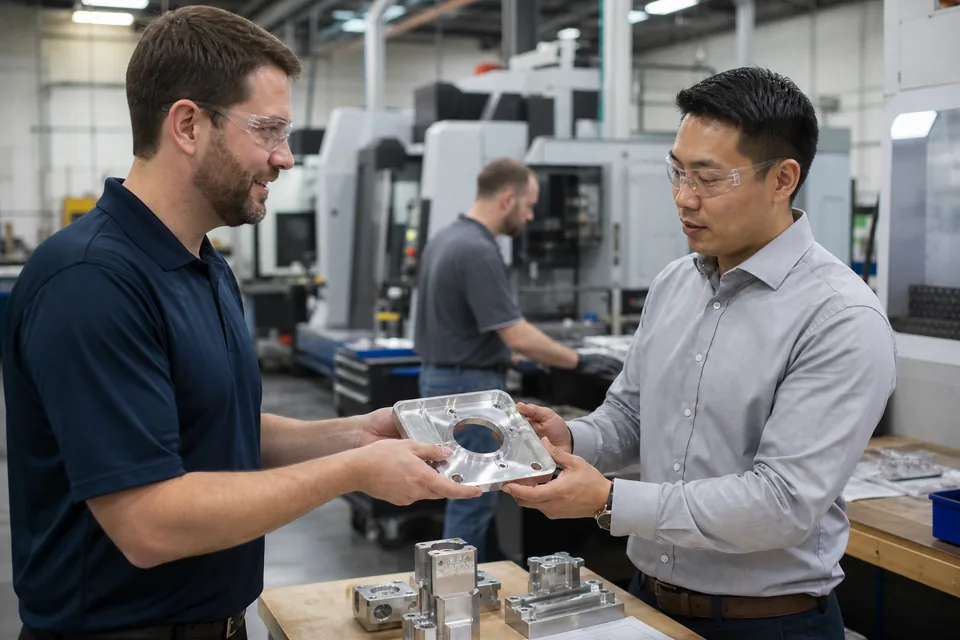
Buying in manufacturing is slow and technical. Sales cycles of six to eighteen months are normal, a new supplier has to pass a quality audit and a first article inspection, and the person who feels the pain (a manufacturing engineer fighting a late or out-of-tolerance part) is rarely the person who signs the purchase order. Leads that arrive at a trade show booth go cold long before that process finishes.
Inbound demand is thin, too. Engineers and buyers do search for suppliers, but sourcing platforms and directories put you on a list next to dozens of shops with the same capabilities, and the RFQs that come through are usually price checks. The accounts that become steady, high-margin work are the ones where you started the conversation before they needed a quote.
That is why most growing contract manufacturers and industrial suppliers run outbound every week: a defined list of OEMs, the right titles at each, and a message about a problem they actually have. The difficulty is that nobody on a small sales team has time to research hundreds of plants, write to each one and follow up for two months. That is the job Sdrs takes off the table.
Manufacturing lead generation, handled end to end
One platform finds the people who buy from manufacturers, contacts them in a way engineers actually answer, and books the first conversation.
The right contacts at each plant
Target by industry, headcount, state and title: purchasing manager, buyer, commodity manager, manufacturing engineer, supplier quality engineer, plant manager or VP of operations. Sdrs pulls verified work emails, and phone numbers on Plus.
Research before the first email
The AI reads each company's site and public news (a new plant, an expansion, a product launch, a hiring push for machinists) and uses it to open the message, so the first line is about their operation, not your machine list.
Messages engineers reply to
Short emails built around one part family, tolerance or lead time problem, with a clear ask: a 15 minute call or a drawing to quote. Sequences run up to 7 steps over several weeks, and you approve every message before it goes out.
Several contacts per account
Industrial deals involve engineering, quality and purchasing. Sdrs can reach two or three roles at the same OEM with different angles, so one silent inbox does not end the conversation with the account.
Meetings booked for you
On Plus, positive replies are detected automatically and answered with your calendar link, so an interested buyer books the call while the problem is fresh instead of waiting for your rep to get back from the floor.
Deliverability and CRM sync
Warmup and deliverability monitoring are included, sending stays within safe daily limits, and Plus syncs contacts and meetings both ways with HubSpot, Salesforce or Pipedrive so your reps see every touch.
How manufacturing prospecting works in Sdrs
Four steps from a blank account to booked calls with buyers. Most teams launch their first campaign the same day.
Define the account list
Start narrow: one industry you already serve well, the states you can ship to economically and a headcount range that matches your capacity, for example medical device OEMs with 100 to 1,000 employees in the Midwest.
Pick the roles
Choose the titles that feel the problem you solve. A machine shop usually writes to manufacturing and supplier quality engineers plus purchasing; an equipment builder writes to plant managers and maintenance leads.
Approve the sequence
Sdrs drafts a 4 to 7 step sequence around your capabilities, certifications (ISO 9001, AS9100, ISO 13485, ITAR) and proof such as on-time delivery or materials you run. You edit and approve before anything is sent.
Take the calls
Replies land in one inbox. Interested buyers get your calendar link, meetings sync to your CRM, and your engineer or sales lead joins the call with the account research already done.
Which manufacturers use Sdrs for lead generation
The common thread is a sale to an engineer, buyer or plant leader, where one new account can mean years of repeat orders.
Contract manufacturers and machine shops
CNC, sheet metal, fabrication and assembly shops that want new OEM programs instead of one-off RFQs. Outreach goes to engineers and buyers in the industries where your certifications already qualify you.
Plastics, castings and forgings suppliers
Injection molders, die casters and forging shops reaching OEMs that are reshoring, adding a second source or launching a product that needs new tooling.
Industrial equipment and automation builders
Makers of conveyors, packaging lines, robotics cells and custom machines writing to plant managers and operations leaders who have a capacity or labor problem this year.
Industrial distributors and MRO suppliers
Distributors of components, tooling, fasteners and maintenance supplies opening accounts with plants in their delivery area, one territory at a time.
Engineering and testing services
Product design firms, testing labs, calibration services and industrial engineering consultants selling to OEM engineering and quality teams.
Manufacturers' reps and sales agencies
Rep firms that sell several principals' lines can run a separate campaign per line from one account, and Pro adds multi-client workspaces.
Manufacturing lead generation agencies vs trade shows vs Sdrs
These are the common ways manufacturers buy pipeline. Agency figures come from published 2026 B2B lead generation cost guides checked in October 2026; agencies such as Callbox and Martal Group quote manufacturing programs privately. An agency or a trade show is the right call for some companies, and we say where below.
| Outbound lead generation agency | Trade shows and directories | Sdrs AI SDR | |
|---|---|---|---|
| Typical cost | Retainers of roughly $3,000 to $20,000 a month in US cost guides; pay per appointment programs also exist | Booth, travel and staff time per show; sourcing directory listings and ads on top | $49, $149 or $499 per month, no per-lead fee |
| What you get | Meetings or leads set by the agency's team | Badge scans and inbound RFQs, often price checks | Booked calls from your own outreach, plus the contact list |
| Speed to first conversations | Several weeks of onboarding and list building | Depends on the show calendar | First sequence can go out the day you sign up |
| Who writes the message | The agency, from your brief | Your booth staff | You, with AI drafts you approve |
| Control over targeting | Agreed with the agency | Whoever walks by or searches | Industry, state, headcount and title are yours |
| Contract | Often a 3 to 6 month minimum | Per show or annual listing | Monthly, cancel anytime |
| Best for | Teams that want no prospecting work at all and have the budget | Industries where buyers still shop in person | Manufacturers who want a steady flow of targeted buyer calls at a fixed monthly cost |
How do manufacturers generate leads?
Manufacturers generate leads from five main sources: trade shows and industry events, sourcing directories and platforms, distributor and independent rep networks, their own website and search, and direct outbound to engineers and buyers at target OEMs. The first four depend on buyers coming to you. Outbound is the only one you can switch on, aim at specific accounts and scale on purpose.
In practice the strongest industrial sales teams combine them. Trade shows and the website catch active buyers, and outbound fills the months between shows with conversations at accounts you chose. The outbound half is where an AI BDR saves the most time, because the research and follow-up is repetitive work that a small team never gets to.
What is the best lead generation strategy for manufacturing companies?
The best lead generation strategy for a manufacturing company is a narrow, account-based one: pick the industries where your certifications and capabilities already win, list the OEMs and plants in that segment, reach two or three roles at each, and lead with a specific problem such as lead times, a second source or a part you make well. Broad blasts to every manufacturer in a state get ignored.
Three details matter more in manufacturing than in other B2B markets. First, speak the buyer's language: tolerances, materials, volumes, certifications. Second, offer a low-commitment next step, like reviewing a drawing or quoting one part, instead of a sales demo. Third, keep following up. Supplier changes are triggered by events (a quality escape, a missed delivery, a new program), and the shop that is still in touch when that happens gets the RFQ.
Large OEMs increasingly ask suppliers for emissions data in supplier surveys, so a shop that can report its Scope 1, 2 and 3 emissions has one more reason for a buyer to say yes. Mention it in outreach only if you can back it up.
How much does manufacturing lead generation cost?
Manufacturing lead generation costs about $3,000 to $20,000 a month with a US outbound agency on retainer, according to published 2026 B2B lead generation cost guides, and many agencies ask for a 3 to 6 month minimum. Cost guides that break out manufacturing put cost per lead from roughly $50 to $200 for basic leads and several hundred dollars for qualified, paid-channel leads. Software-only outbound such as Sdrs costs $49 to $499 a month with no per-lead fee.
The comparison that matters is cost per qualified buyer conversation, not cost per contact. A $5,000 monthly retainer that sets six meetings costs about $830 per meeting. The same six meetings from an Sdrs Plus campaign at $149 a month cost about $25 each in software, plus the time your team spends taking the calls. If you are weighing done-for-you options, our breakdown of appointment setting services cost shows what agencies charge per meeting.
Does cold email work for manufacturing sales?
Yes, cold email works for manufacturing sales when it is targeted and technical. Engineers and buyers do answer short, specific emails about a part, a process or a supply problem they recognize; they ignore generic capability brochures. Expect results over weeks rather than days, because supplier decisions follow programs and audits.
The pattern that gets replies is simple: one sentence about their operation, one sentence about a capability that matches it ("we run 5-axis titanium work for two orthopedic OEMs"), and one small ask. Pair email with LinkedIn and a phone call for key accounts. Sdrs Plus runs all three from one sequence, with call scripts for the steps where a rep picks up the phone.
Who should you target with manufacturing leads?
Target the people who feel the problem you solve, then the people who approve the purchase. For contract manufacturing that is usually manufacturing engineers, supplier quality engineers and commodity buyers first, then purchasing managers. For equipment and automation it is plant managers, maintenance leads and directors of operations, with the VP of operations or owner at smaller plants.
Company size changes the map. At a 50 person plant the owner or general manager often makes the call. At a 2,000 person OEM you will need engineering to want you and purchasing to approve you, which is why reaching more than one role per account roughly doubles your chances of a conversation. The same multi-role approach powers our IT lead generation and SaaS lead generation campaigns, adapted to each buyer.
Manufacturing lead generation, common questions
A manufacturing lead is a person at a company that could buy your parts, materials, equipment or services, with enough contact detail and context to start a conversation, such as a supplier quality engineer at a medical device OEM. A qualified lead is one who has confirmed interest, a relevant need and a role in the purchasing decision.
Manufacturers buy leads from B2B data providers, sourcing directories, trade show organizers and outbound agencies. Sdrs includes the data: Starter gives you up to 500 leads a day with verified emails and Plus up to 2,000 with phone numbers, so you do not pay a separate data subscription.
The first replies usually arrive within the first two weeks of sending, and booked calls follow over the next several weeks. Closing new production work takes longer, often months, because of quoting, first article inspection and supplier approval. Judge outbound on conversations booked in the first 60 to 90 days.
Yes. You choose the industry, company size, location and titles for each campaign, so you can run one campaign for aerospace OEMs and another for medical device makers with different messages and proof points, such as AS9100 or ISO 13485 certification.
B2B cold email is legal in the US under CAN-SPAM when you use accurate sender details, a truthful subject line, a physical mailing address and a working opt-out that you honor. Sdrs adds the unsubscribe handling and keeps opt-outs suppressed across campaigns.
No. Many contract manufacturers run Sdrs with the owner or one sales lead taking the calls. The AI does the research, writing, sending and follow-up, and on Plus it books interested replies onto your calendar, so the only human step is the conversation itself.
An agency assigns people to prospect for you on a monthly retainer, usually with a minimum term. Sdrs is software that does the same prospecting work at a fixed monthly price from $49, with you approving messages and owning the list. Choose an agency if you want zero involvement; choose Sdrs for control and cost.
Fill the months between trade shows with buyer calls
Launch your first manufacturing lead generation campaign today. Plans start at $49 a month, billed monthly, with no per-lead fees and no annual contract.
Keep reading
Commercial roofing leads
Roof assessments with property and facility managers for commercial roofing contractors.
Commercial solar leads
How solar installers book feasibility calls with building owners and CFOs at a flat monthly price.
Freight broker leads
How freight brokers book calls with shippers, including manufacturers, at a flat monthly price.
Appointment setting services cost
What B2B appointment setting agencies charge per meeting and per month, checked on vendor pages.
AI appointment setter
How Sdrs books B2B meetings for less than an appointment setting service, from $49 a month.
IT lead generation
Booked calls with CIOs and IT directors for IT services firms and software companies.
Sdrs pricing
Starter, Plus and Pro plans with every feature listed, billed monthly or annually.